Tuesday, 27 May 2014
Theodosia of Constantinople
Sunday, 18 May 2014
Eleutheirius
Born in Rome, Eleutherius's father died when he was a young child and his mother, Anthia, took him to Anicetus, the Bishop of Rome, who taught him in the divine scriptures. Eleutherius is venerated as a bishop of Illyricum; according to tradition, Antia was his mother. According to a source in Greek dating from before the 5th century, Antia was the widow of a consulnamed Eugenius. Her son Eleutherius was ordained a deacon and priestand then consecrated as bishop by a man named Anicetus. This tradition may have originated through confusion with Pope St. Eleutherius, who may have been a deacon of Pope Anicetus (c. 154-164).
The tradition states that Eleutherius was appointed bishop of Messina and Illyricum at the age of twenty and apparently settled in Valona. He was imprisoned by a comes named Felix; Eleutherius and Antia were taken to Rome to be judged by the Emperor Hadrian. According to this source, Eleutherius and Antia were both condemned to death on December 15.According to tradition, Eleutherius was clubbed to death.
Monday, 12 May 2014
Beatus of Lungern
Beatus of Lungern, known also by the honorific Apostle of Switzerland or as Beatus of Beatenberg or Beatus of Thun, was a probably legendary monk and hermit of early Christianity, and is revered as a saint. Though his legend states that he died in the 2nd century, it is likely that his story has been conflated with other saints of the same name, especially Beatus of Vendôme, and an Abbot Beatus who received a charter in 810 from Charlemagne to confirm that Honau Abbey would be administered by Irish monks.
While legend claims that he was the son of a Scottish king, other legends place his birth in Ireland. Beatus was a convert, baptized in England by Saint Barnabas. He was allegedly ordained a priest in Rome by Saint Peter the Apostle, whereupon he was sent with a companion named Achates to evangelize the tribe of the Helvetii. The two set up a camp in Argovia near the Jura Mountains, where they converted many of the locals.
Beatus then ventured south to the mountains above Lake Thun, taking up a hermitage in what is now known as St. Beatus Caves, near the village of Beatenberg, probably in the ninth century. Tradition states that this cave is where he fought a dragon. Saint Beatus' grave is located between the monastery and the cave entrance. He died at an old age in 112.
While legend claims that he was the son of a Scottish king, other legends place his birth in Ireland. Beatus was a convert, baptized in England by Saint Barnabas. He was allegedly ordained a priest in Rome by Saint Peter the Apostle, whereupon he was sent with a companion named Achates to evangelize the tribe of the Helvetii. The two set up a camp in Argovia near the Jura Mountains, where they converted many of the locals.
Beatus then ventured south to the mountains above Lake Thun, taking up a hermitage in what is now known as St. Beatus Caves, near the village of Beatenberg, probably in the ninth century. Tradition states that this cave is where he fought a dragon. Saint Beatus' grave is located between the monastery and the cave entrance. He died at an old age in 112.
Sunday, 13 April 2014
Henry Walpole
He was born at Docking, Norfolk, in 1558, the eldest son of Christopher Walpole, by Margery, heiress of Richard Beckham of Narford, and was educated at Norwich School, Peterhouse, Cambridge, and Gray's Inn. He was present at the execution of Edward Campion, and his clothes were sprinkled with Campion's blood. Walpole then converted to Roman Catholicism, gave up his law practice and followed in Campion's footsteps. He went by way of Rouen and Paris, toReims, where he arrived, 7 July 1582. On 28 April 1583, he was admitted into the English College, Rome, and in October received minor orders. On 2 February 1584, he became a probationer of the Society, and soon after went to France, where he continued his studies, chiefly at Pont-à-Mousson. He was ordained subdeacon and deacon at Metz, and priest at Paris, 17 December 1588.
After being twice imprisoned at Newgate for religion in 1586, Walpole arrived at Reims, 23 December 1589; he was ordained subdeacon at Laon, 23 September 1589, deacon and priest at Soissons, 17 March and 18 March 1590, was sent on the mission the following 9 April, and landed at Whitby. After acting as chaplain to the Spanish forces in theNetherlands, suffering imprisonment by the English at Flushing in 1589, and being moved about to Brussels, Tournai,Bruges, and Spain, he was at last sent on the mission in 1590. He was arrested shortly after landing at Flamborough for the crime of Catholic priesthood, and imprisoned at York. The following February he was sent to the Tower, where he was frequently and severely racked. He remained there until, in the spring of 1595, he was sent back to York for trial, where he was hanged, drawn and quartered on 7 April 1595. With him suffered Alexander Rawlins, of the Diocese of Gloucester. He was canonized as one of the Forty Martyrs of England and Wales.
Thursday, 3 April 2014
Saint Serenus the Gardener
Saint Serenus the Gardener was a 4th-century martyr venerated by the Roman Catholic and Eastern Orthodox churches.
According to legend, he was born in Greece, emigrated to Sirmium in, and was known for his skill at gardening. He rebuked the wife of an imperial guard for walking in his garden and she told her husband, who reported him to the Emperor Maximian. The governor found Serenus innocent of insulting the guard's wife, but had him beheaded in his garden, when he refused to sacrifice to the Roman gods.
Friday, 28 February 2014
Honorina
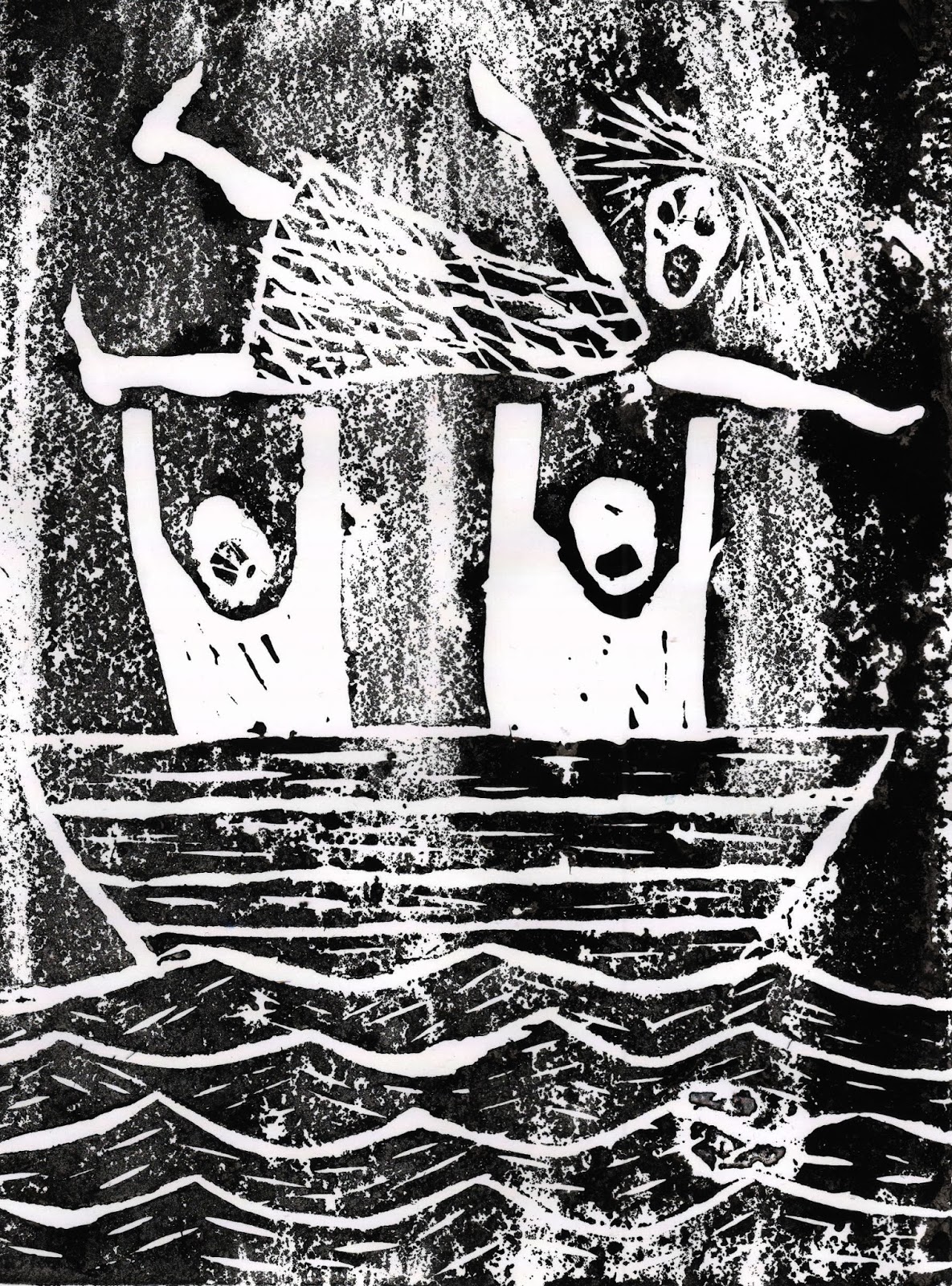
Not much is known of her — a tradition that exists in the diocese of Rouen that Honorina was a member of the Calates, who was martyred during the persecutions of Diocletian. Her body was thrown into the Seine and would have drifted to Graville-Sainte-Honorine, where it was collected by Christians and buried in a tomb.Saint Honorina is the patron saint of boatmen.
Subscribe to:
Posts (Atom)